Spot Guide · Kyushu
Mount Aso
One of the world's largest active calderas, with a crater you can (sometimes) drive right up to — Aso, Kumamoto
Best time to go: Year-round for the caldera and Kusasenri grasslands — spring for fresh green after the controlled burns, October-November for the clearest crater views and golden grass, winter for frost-covered trees at Kusasenri. The Nakadake crater itself can close on short notice at any time of year when volcanic gas levels rise, so don't build a whole day around it alone.
Hours
Kusasenri & viewpoints: dawn-dusk, always open · Crater road & shuttle: seasonal, roughly 8:30-18:00 Mar-Oct, shorter in winter — closes without notice when the volcanic alert level rises · Aso Volcano Museum: 9:00-17:00 (last entry 16:30)
Visitor Info
0967-34-2111 (Aso Volcano Museum) · 0967-34-1600 (Aso Tourist Information)
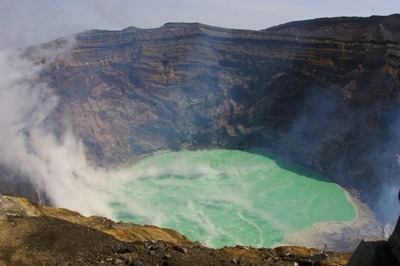
Mount Aso is one of the largest active volcanoes in the world, its caldera stretching roughly 25km north-south and 18km east-west — big enough that towns, farmland, and a train line sit inside it. The still-active Nakadake crater sends up a steady plume of steam and sulfur, and on clear days you can walk right up to the rim... when the alert level allows it.
That last part matters: Nakadake is one of Japan's most closely monitored volcanoes, and access to the crater rim closes on short notice whenever gas levels or seismic activity rise — sometimes for a few hours, sometimes for months. It's worth building slack into your itinerary rather than routing a whole day around the crater alone.
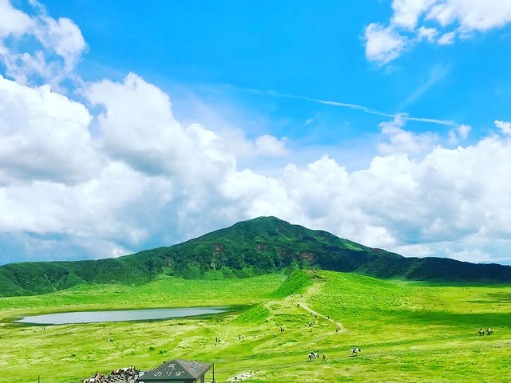
The rest of the caldera doesn't share that unpredictability. Kusasenri, a grassy plain at around 1,100m with grazing horses and a direct view of the smoking crater, is open year-round and free. Around the rim you'll find Aso Shrine, hot-spring towns like Uchinomaki, and some of Kyushu's best rural driving roads.
The Landscape
Visitor Facilities
Highlights
One of the world's largest calderas
Formed by four catastrophic eruptions between roughly 270,000 and 90,000 years ago, the Aso caldera runs about 120km in circumference — large enough to hold the city of Aso, farmland, and a rail line inside its rim.
Nakadake's active crater
A milky turquoise crater lake, constant steam, and the smell of sulfur — when it's open, this is about as close as most visitors will ever get to an active volcanic crater. Access is gated by the current alert level, so it isn't guaranteed on any given day.
Kusasenri grasslands
A wide volcanic plain at 1,100m elevation where horses graze freely, with Nakadake smoking in the background. Open year-round, free to walk, and the safest bet if crater access is closed.
Aso Shrine & onsen towns
One of Japan's oldest shrines sits near the caldera's edge, and nearby Uchinomaki is a quiet hot-spring town — a good base for exploring without the crowds of Beppu or Kurokawa.
How to Spend Your Time
Pick the plan that matches how long you've got.
Only 90 minutes
~1.5 hrs
Go straight to Kusasenri. It's free, open year-round, and gives you the classic view of Nakadake's smoke over grazing horses without gambling on crater access or museum hours.
Half a day
~4 hrs
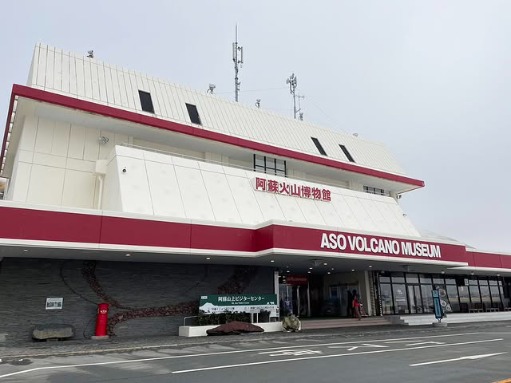
Kusasenri first, then the 5-minute drive to the Aso Volcano Museum — budget 45 minutes for the exhibits and the live crater camera. If the crater road is open, finish with the drive or shuttle up to the rim; if not, that's a full and satisfying day on its own.
A full day
6-8 hrs
Add Komezuka, the rice-bale-shaped grass cone that's Aso's most photographed single feature (a 10-minute stop from the roadside pull-off), then Daikanbo on the caldera's north rim for the classic wide shot of the whole caldera. Round it out with Aso Shrine and a soak at Uchinomaki onsen before heading out.
Getting Around & Costs
Prices in Japanese yen (JPY).
JR Aso Station → Asosanjo Terminal bus
Stops at Kusasenri along the way — the main way in if you're not driving.
¥1,000 one-way
Crater shuttle bus (when running)
Asosanjo Terminal to the crater parking area. Suspended entirely whenever the alert level closes the crater.
¥700 one-way
Aso Park Road toll road (self-drive)
Open roughly 8:30-18:00 in the Mar-Oct season, shorter hours in winter — gated shut the moment gas levels rise.
≈¥1,200 by car
Aso Volcano Museum
Exhibits on the caldera's formation plus a live crater camera — worth it even when the real crater is closed.
¥1,100 adults
Seasonal Picks
Spring (Mar-May)
Fresh green returns to Kusasenri right after the annual controlled burns; sakura blooms in the lowlands around the caldera in late March-April.
Autumn (Oct-Nov)
The clearest skies of the year and the best crater visibility, with Kusasenri's grass turning a deep gold.
Winter (Dec-Feb)
Frost-covered trees at Kusasenri through mid-February, and the thinnest crowds — but also the shortest crater-road hours.
Plan Your Visit
Address
1930-1 Akamizu, Aso, Kumamoto 869-2232 (Aso Volcano Museum, at the base of the crater road)
Getting There
JR Aso Station is the gateway — from there it's a bus to Asosanjo Terminal (via Kusasenri), then the crater shuttle if it's running. Renting a car in Kumamoto or Fukuoka gives you the most flexibility, since bus frequency is limited and the crater road keeps its own schedule.
Visit Tips
- Check the official alert status at aso-volcano.jp the morning of your visit — the crater closes without notice when gas levels or seismicity rise, sometimes for months at a time.
- Don't build your whole day around the crater. Pair it with Kusasenri, which is free, open year-round, and has its own view of the smoking crater from a safe distance.
- Rent a car if you can — the bus network inside the caldera is thin, and a car gets you to Aso Shrine, Uchinomaki onsen, and the scenic Milk Road without waiting on schedules.
- Bring layers. Kusasenri sits at roughly 1,100m and is noticeably colder and windier than Kumamoto city or Fukuoka, even in summer.
- If the crater is closed, the Aso Volcano Museum's live camera feed is the next best thing — and its exhibits explain why the caldera looks the way it does.
More Resources
Access, hours, and safety restrictions change often — tap through to see what's current before you go.
Ready to visit Mount Aso?
Check current conditions before you go.
0967-34-2111 (Aso Volcano Museum) · 0967-34-1600 (Aso Tourist Information)
A Note on This Guide
Crater access, shuttle bus operation, and museum hours/prices are accurate as of August 2026 but change constantly — this is one of Japan's most closely monitored active volcanoes, and the alert level can shut the crater with no notice. Always confirm current conditions on the official site linked above before building a day around it.
FAQs
Can I always see the crater at Mount Aso?
No — Nakadake is an active, closely monitored volcano, and the crater road and shuttle bus close whenever the alert level rises, sometimes for months. Check the official status site the morning of your visit, and have Kusasenri as a backup plan.
Do I need a car to visit Mount Aso?
It helps a lot. Public transport runs from JR Aso Station via bus to Asosanjo Terminal (with a stop at Kusasenri), then a shuttle to the crater when it's open, but services are infrequent. A rental car gives you access to Aso Shrine, Uchinomaki onsen, and the scenic drives around the caldera on your own schedule.
What's the best time of year to visit?
October-November for the clearest skies and best crater visibility, with Kusasenri's grass turning gold. Spring (March-May) brings fresh green after the annual controlled burns. Whatever the season, crater access depends on the volcano's alert level more than the calendar.
What can I do if the crater is closed?
Kusasenri grasslands are free, open year-round, and give you a clear view of the smoking crater from a safe distance. The Aso Volcano Museum, at the base of the crater road, has a live camera feed and exhibits on the caldera's formation.