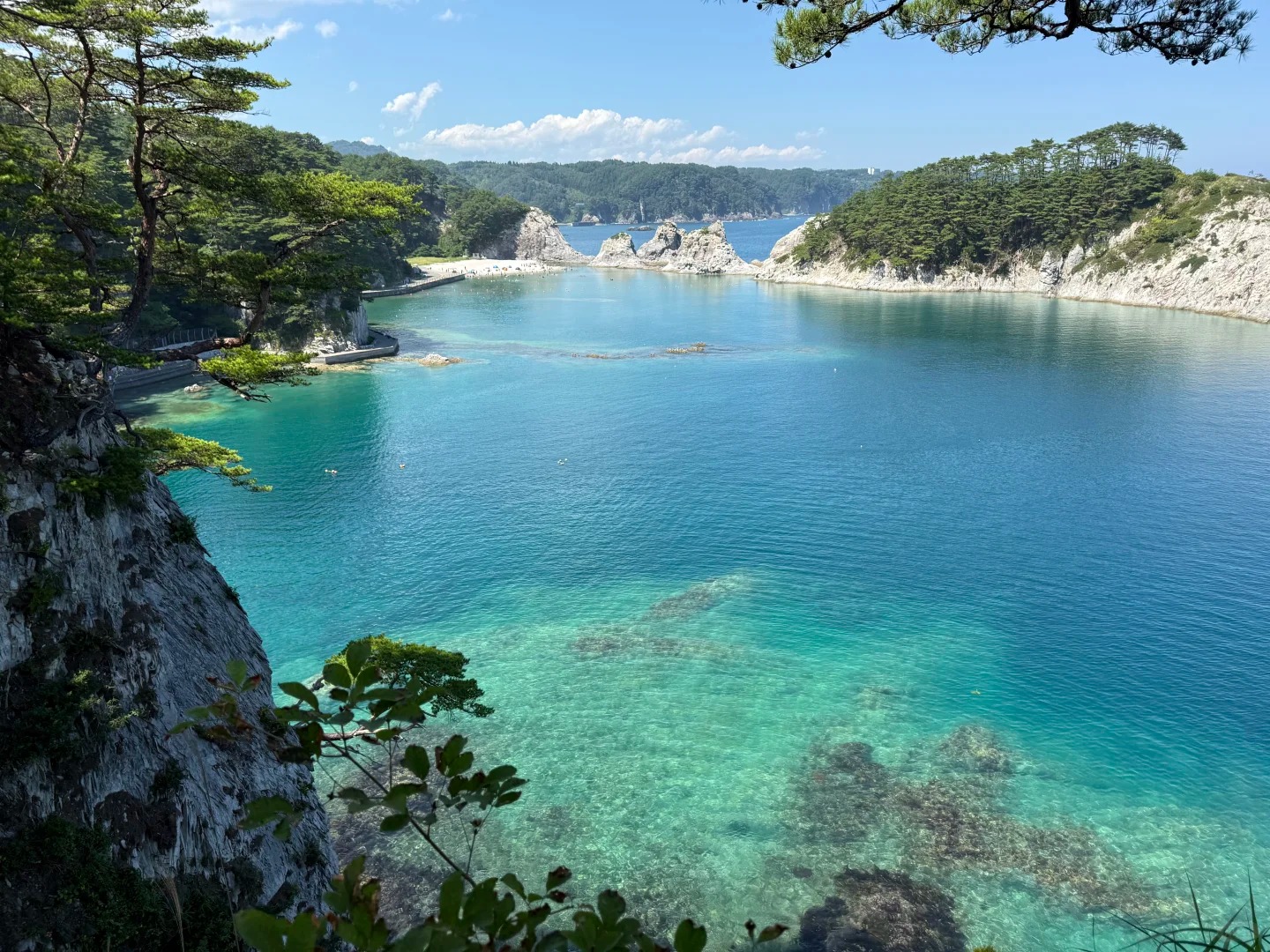
White rhyolite rock, intruded roughly 52 million years ago and later carved into jagged pillars by rising sea levels, scattered across water so clear and blue it looks tropical — except this is Iwate Prefecture, on Japan’s northeastern Sanriku coast. Local tradition credits a 17th-century Zen priest with naming it: he reportedly compared the view to Jodo, the Buddhist Pure Land, and the name stuck — though the story predates any confirmed written record, so take it as legend rather than history.
Where and when
Jodogahama sits in Miyako City, Iwate Prefecture. Best June-October: swimmable July-August (the water stays cold, often around 20°C even in peak summer), bluest and clearest September-October. The beach itself is free; boat cruises run ¥1,800-2,000.
Getting there from Tokyo
- Tohoku Shinkansen, Tokyo → Morioka: ~2h10-30min. The Yamabiko has unreserved seats (¥13,960); the faster Hayabusa is reserved-seating only.
- 106 Kyuko bus, Morioka → Miyako: ~2h15min, ¥2,300.
- Local bus, Miyako Station → Okujodogahama: ~24 min, ¥250 — drops you right at the beach.
- Taxi from Miyako Station: ~10 min, roughly ¥2,000 if the bus timing doesn’t line up.
- Driving from Morioka: a free, expressway-grade bypass completed in 2021 cut this to about 1.5 hours door-to-door. Parking near the beach runs around ¥500/day.
A 2-day itinerary from Tokyo
Day 1 — Shinkansen to Morioka, bus to Miyako, afternoon at Jodogahama with the glass-bottom bay cruise, onsen hotel and fresh uni for dinner. Day 2 — Morning boat tour into the Blue Cave, lunch at Miyako fish market, afternoon train back to Tokyo. With a spare day, add Hiraizumi’s Chuson-ji on the way, or continue north to Kuji.
What to actually do there
- Sappa-boat tour into the Blue Cave (Aonodoukutsu / Hachinohe Cave) — ¥2,000, about 20 minutes. Sunlight through the cave mouth turns the water a glowing cobalt blue. Runs March-November only.
- Glass-bottom bay cruise (Miyako Uminekomaru) — ¥1,800, loops past the white rock formations with seabirds trailing the boat.
- Coastal promenade to the overlook for the postcard view over the whole bay.
- Uni rice bowl at Miyako fish market — Sanriku’s sea urchin has a strong regional reputation, and it’s the natural place to eat it.
Before you go
- The Blue Cave tour is weather-dependent and cancels in rough seas or high wind — check conditions the morning of, not the night before.
- The water is genuinely cold. Bring a towel and don’t push a long swim even in August.
- Local buses run only 1-2 times an hour — check the return schedule before you leave the beach, or you’re relying on a taxi.